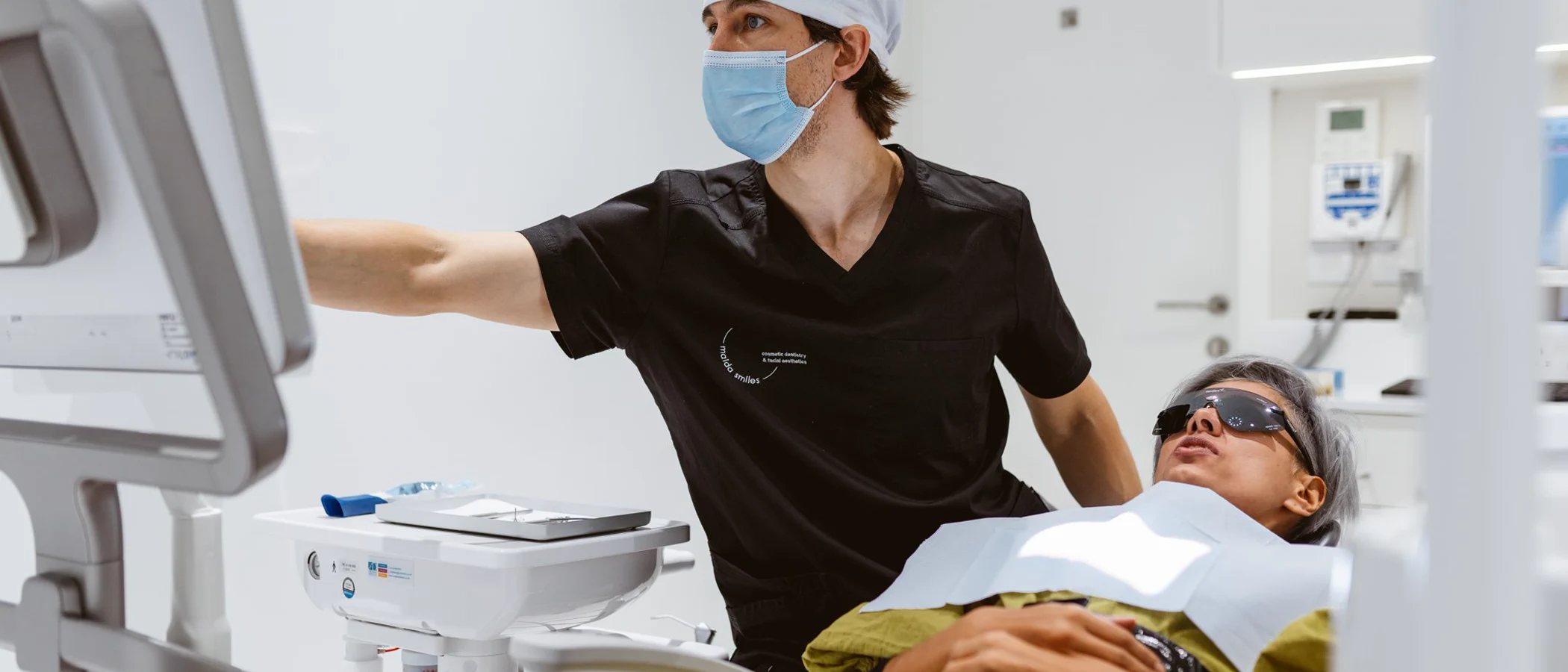
When I mention sedation to an anxious patient, I can watch two reactions compete in their face. Relief — because the treatment they have feared for years might be bearable after all. And a new fear — of being unconscious, out of control, 'put under'. The second fear comes from a misunderstanding that the phrase 'sleep dentistry' has done a lot to spread, and it deserves a clear answer: conscious sedation is not general anaesthesia. You are not asleep. You are somewhere much more useful — and much safer.
What sedation dentistry actually feels like
With intravenous sedation — a small cannula in the back of the hand, medication titrated dose by dose — most patients describe a deep, warm indifference. You can hear us, answer a question, follow an instruction to turn your head slightly. You breathe for yourself, you keep your protective reflexes — and yet the ceiling of your anxiety simply is not there. Time compresses remarkably: a three-hour full-arch implant surgery is remembered, if at all, as a few drowsy minutes. Inhalation sedation — nitrous oxide through a soft nasal mask — is lighter: a controlled, pleasant calm that builds within minutes and lifts within minutes of the mask coming off, light enough that you can travel home largely recovered.
I trained in both routes at Queen Mary University of London through the SAAD programme — the UK's established society for sedation in dentistry — and I will tell you honestly that the training matters more than the drugs. Conscious sedation is a monitored clinical discipline with strict protocols for patient assessment, dosing, oxygenation and recovery. Throughout your treatment you are monitored continuously — pulse, oxygen saturation, blood pressure — by a team whose only job in that moment is you. That is the unglamorous machinery behind the word 'relaxed'.
Who sedation is for — and who it is not
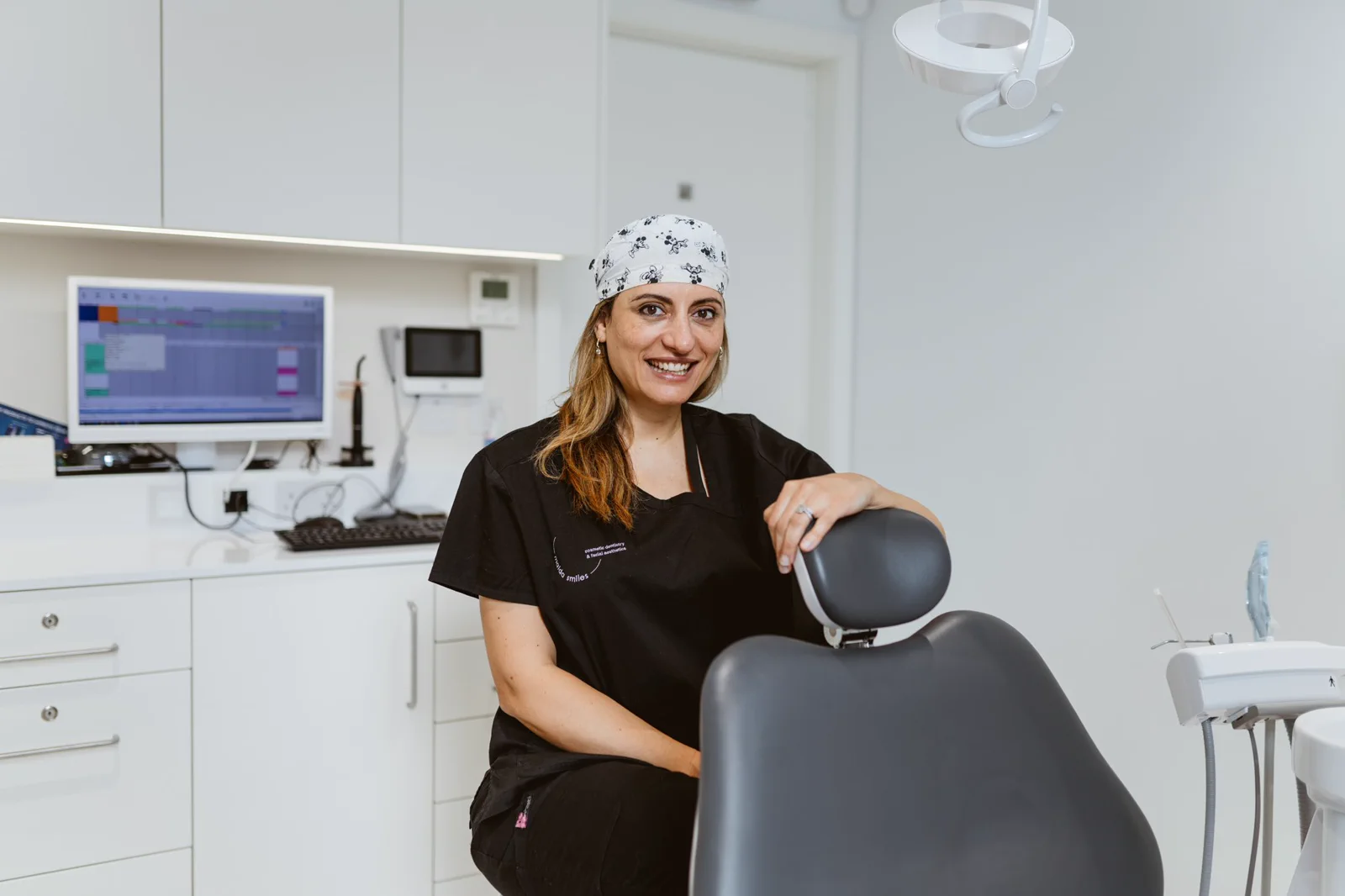
Sedation earns its place in three situations. Genuine dental phobia — the patient for whom even a check-up is an ordeal, for whom fear has dictated a decade of avoidance. Long, complex procedures — full-arch implant surgery, multiple extractions with immediate implants, bone grafting — where even a relaxed patient would find hours in the chair demanding. And patients whose strong gag reflex or particular medical picture makes ordinary treatment miserable. It is not for everyone, and it is not automatic: a proper pre-assessment — medical history, medications, airway, previous sedation experiences — decides safety before anything is booked. A clinic that offers sedation without that assessment is offering a shortcut, not a service.
The anticipation is almost always worse than the day. I have heard that sentence, in some form, from nearly every sedation patient I have treated.
If fear has kept you from a dentist for years, do not start by booking surgery — that is like signing up for a marathon before you have walked around the block. Book a conversation. At our clinics in Maida Vale and Paddington that first consultation happens away from the treatment room: meet the team, see the space, ask every question you have been rehearsing at two in the morning. Sedation works best on patients who chose it with clear eyes, as one deliberate part of a plan they understand. Calm, like everything else we do, is built in advance.