Of everything we do at Maida Smiles, 'teeth in a day' is the phrase patients remember and the phrase they search for. It deserves its reputation: for someone who has spent years hiding a failing smile behind their hand, leaving the clinic the same day with fixed, functional, natural-looking teeth is one of the most dramatic transformations modern dentistry can offer. But the phrase describes the patient's experience, not the clinical reality. The clinical reality — same-day dental implants, immediate loading, All-on-4 and its variations — is closer to a launch window than a miracle: everything is calculated in advance, and the day itself either meets the calculated conditions or it does not.
What 'immediate loading' actually is
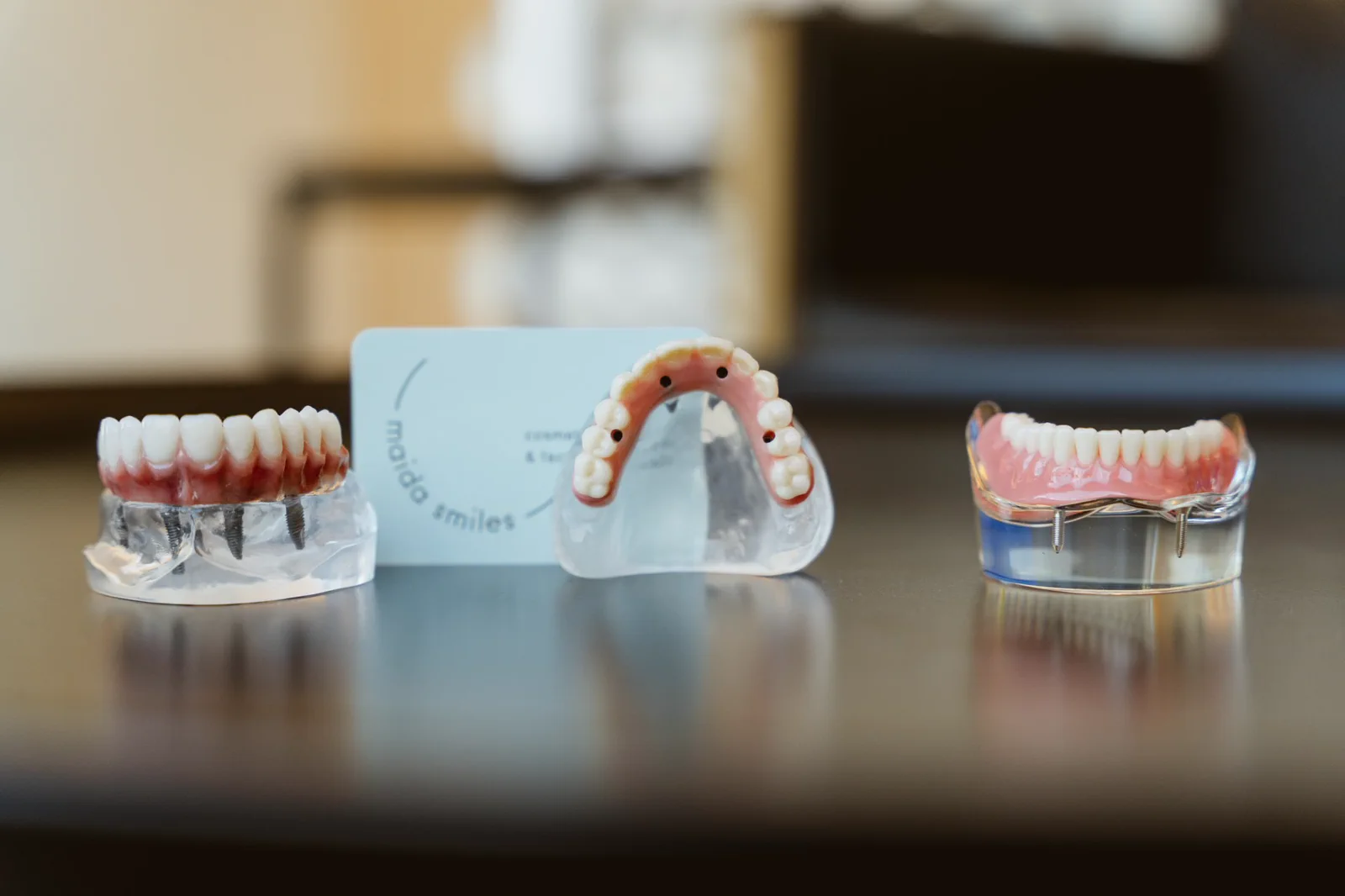
A dental implant is a titanium fixture placed into the jaw bone, which the bone then fuses to over a period of months — a process called osseointegration. Traditionally, implants were left buried and unloaded during that healing period, and the patient wore a denture in the meantime. Immediate loading changes the sequence: the implants are placed and a fixed provisional bridge is attached to them on the same day, so the patient never spends a single day without teeth. For a full arch — replacing all the teeth in the upper or lower jaw — this is the protocol most people know as All-on-4: four or more implants, positioned at calculated angles to make the best use of available bone, supporting a full set of fixed teeth.
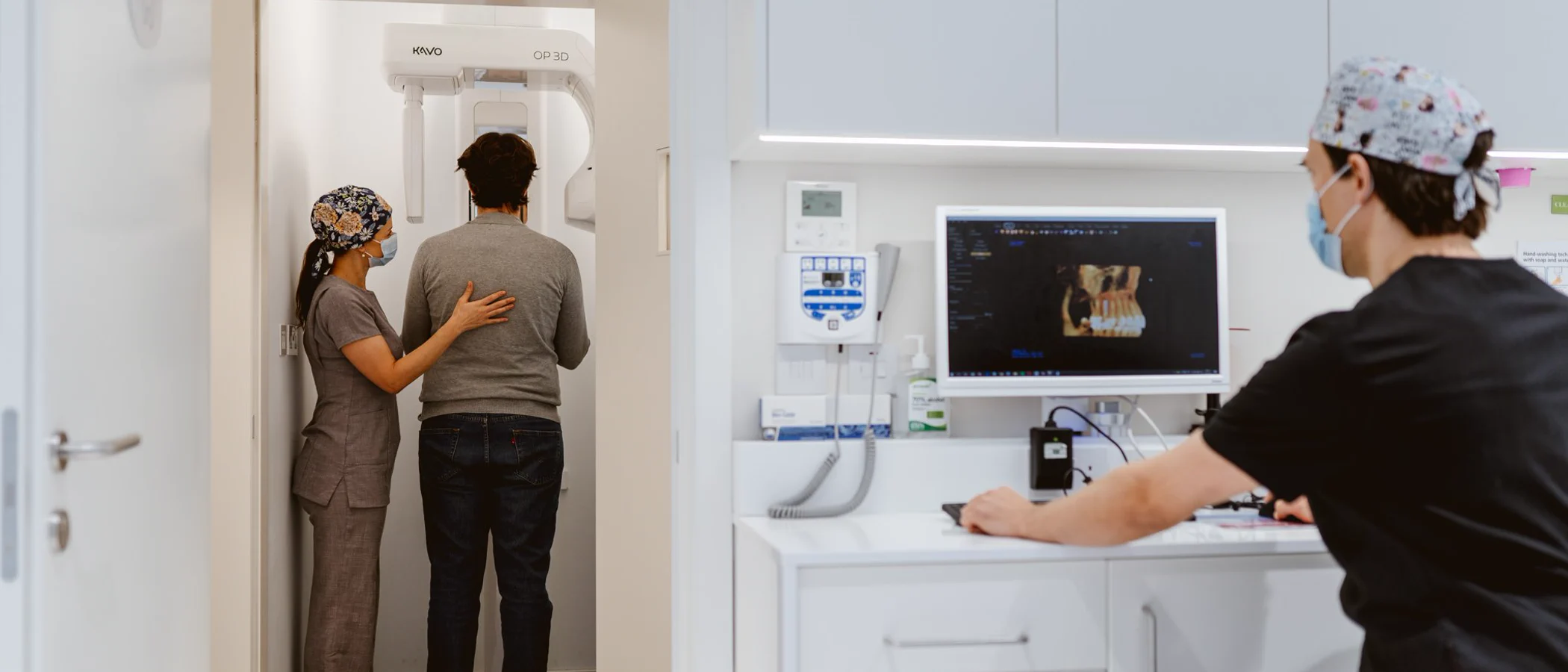
The reason immediate loading works is not bravery; it is arithmetic. Primary stability — how firmly each implant grips the bone at the moment of placement — is measured in newton-centimetres of insertion torque, and it has to reach a defined threshold before an implant is allowed to carry load on day one. Bone density, assessed on a CBCT scan weeks earlier, has to support the plan. The bite has to be designed so that chewing forces flow where the implants are strongest and the provisional bridge is protected. When those conditions are met, immediate loading is not a gamble; it is the plan executing. When they are not met, a responsible implant surgeon changes the plan — and tells you why.
The day is the easy part
This is why, in a well-run clinic, the day itself should feel almost uneventful. The CBCT scan happened weeks earlier. The implant positions were chosen on screen in planning software, checked against nerves and sinuses in three dimensions, and locked into a 3D-printed surgical guide that translates the digital plan into the patient's mouth with sub-millimetre accuracy. The provisional bridge was designed and manufactured before the first incision. Most of our full-arch patients in London choose to have the surgery under intravenous sedation, so their memory of the day is a calm blur. On the day, we are not improvising — we are assembling something that has already been built once, digitally.
What patients should actually ask
If you are considering same-day teeth in London or anywhere else, the question is not 'can you do it?' — many clinics can. The question is 'when would you refuse to?' A surgeon who cannot describe the cases where immediate loading is the wrong call is not describing a protocol; they are describing a product. The honest answer involves bone quality, insertion torque values, your bite, your medical history, sometimes your smoking status — and sometimes the decision to stage the treatment: graft first, wait for the biology, load later. Walking out with teeth matters less than keeping them for twenty years.
If surgery feels dramatic, something upstream went wrong. The day should be the calmest part of the whole process.
The provisional bridge is followed some months later by the definitive one — typically milled from titanium and layered with ceramic — once the implants have fully integrated and the gum architecture has settled. That quiet second act never makes the marketing, and it is where the twenty-year result is actually secured: final occlusion, final aesthetics, final hygiene design. Teeth in a day is a true promise. It is just the first day of a much longer discipline.